
The AGI Divide: Utopia vs Dystopia, Airplanes vs Parachutes
MIDNIGHT · REF. 001 · 2026.9.18 · THE SAME CLOCK

When these two figures faced off on screen, what collided wasn’t merely a sequence of questions and answers. It was a clash of fundamentally different worldviews.
Zanny Minton Beddoes, Editor-in-Chief of The Economist, peered beyond her prepared notes toward an approaching dystopia, while Elon Musk looked past existing norms toward the utopia he envisions.
That the conversation, initially centered on AGI and the end of labor, veered so sharply into political contradictions, European far-right issues, and the blame game over AI safety was no accident. It was a scene that transcended the friction between interviewer and interviewee. It revealed how the ground we stand on dictates the future we see.
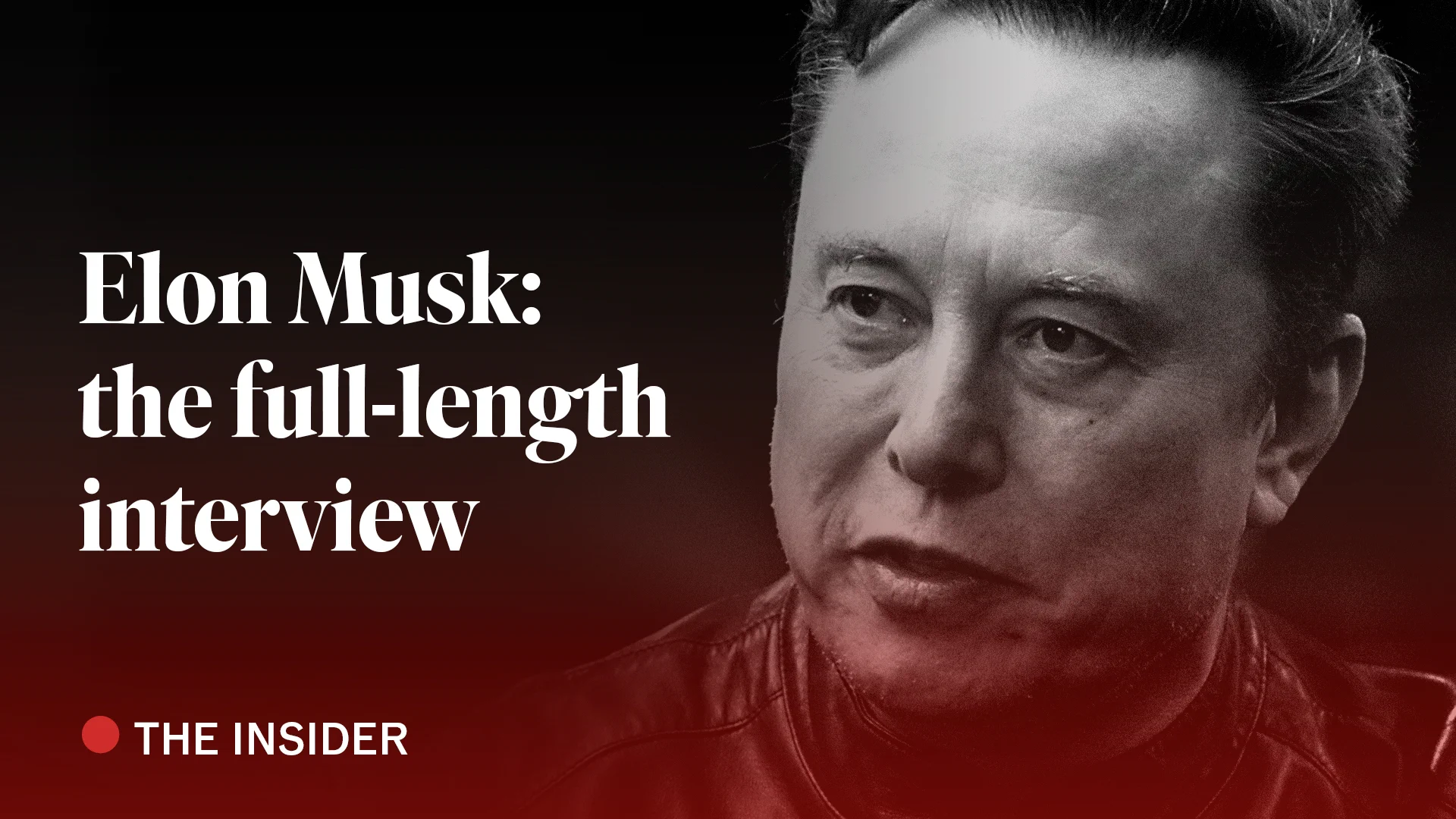
Watch the full interview here or on YouTube: https://t.co/ivNczp96Jw
The Guardian’s Gaze vs. The Breaker’s Vision
At the pinnacle of institutional media, an editor-in-chief occupies a position tasked with upholding established social systems, laws, and ethical norms. From that vantage point, the arrival of radical technology is a harbinger of systemic collapse before it can be a blessing.
When Musk asserted that “humans will no longer be in control in ten years” and claimed AI would surpass the collective intelligence of humanity within five, Beddoes’ sharp questions dug relentlessly into what those words specifically meant — and how his own companies could survive in such a world. Her role is to identify and mend systemic cracks before they widen. From her perspective, the future is inevitably a dystopia that must be monitored and managed.
Conversely, for Musk, who seeks to rewrite the board from outside the established order, institutional norms are not values to protect; they are shackles to be broken.
He speaks of an “age of amazing abundance” where labor becomes obsolete. While acknowledging that the risk of AI spinning out of control is never zero, he argues that humanity must not hit the brakes — insisting that even if a stop button exists, we shouldn’t press it. For him, the future isn’t a place to fear the collapse of old systems; it’s a utopia worth reaching, even at the cost of a 10% or 20% chance of catastrophe.
Their sparring wasn’t a battle of truth versus falsehood, or good versus evil. It was a collision between pessimistic realism, burdened with maintaining order, and extreme technological optimism, driven by the belief that progress only happens by shattering the old frame.
The Maker of Airplanes, The Maker of Parachutes
“The optimist invents the airplane, the pessimist the parachute.”
— Gil Stern
While reckless optimism pushes civilization forward, cautious pessimism, facing the terror of a fall, constructs the safety nets that keep it from disintegrating in an instant. It isn’t a question of which perspective is right or wrong. A parachute without an airplane is useless; flight without a parachute is merely a reckless gamble.
Beddoes’ persistent probing wasn’t a malicious nitpicking. She was fulfilling her duty to weave a social safety net. Conversely, Musk’s relentless drive might have been the destiny of an innovator determined to launch a plane, regardless of the imminent crash risk.
The future we face won’t be a rosy utopia or a gray dystopia. It will be an imperfect reality born from the friction between the flight path carved by reckless pioneers and the parachutes woven by those trying to keep the system intact as they move at such staggering speed.
Looking at Myself Beyond the Screen
Watching the flood of comments beneath the interview, I initially took sides with ease. Some branded Beddoes a “megaphone for the establishment” blocking innovation; others mocked Musk as an irresponsible, dangerous eccentric.
But amid the cheering and jeering, a cold flash of shame hit me. Was I truly judging them objectively? Or was I, like everyone else, squinting one eye shut, trapped within the narrow lens of my own reality?
Looking back, I find myself oscillating between the airplane and the parachute several times a day.
When my livelihood feels precarious or news of corporate restructuring hits, I feel a jolt of fear. Like Beddoes, I clutch the parachute and retreat into the dystopian dread that “technology must be regulated by law.” But then, when a grueling task that took days is solved in seconds by a new AI tool, I become like Musk — euphoric, staring out the window at a utopian horizon.
The tomorrow we fear or dream of isn’t created by technology alone. It is a raw mirror reflecting our own shifting realities, our daily anxieties, and our personal scarcities.
The future isn’t a finished product delivered from a Gigafactory in Texas or an editorial office in London.
Is the landscape of tomorrow you envision a dark dystopia or a radiant utopia?
Before you decide, look down at where you are standing. The tomorrow you imagine is merely the reflection of your today.
